
Hand Tool Headlines
The Woodworking Blogs Aggregator
“Glory to God in the highest heaven, and on earth peace to those on whom his favor rests.” - Luke 2:14
Norse Woodsmith Blog Feeds
The Work Goes On...
...Inside and Out

Things are tight, but we have continued filming these past weeks, and it's working fine. My love of woodworking has never faltered in sixty years and is still thriving despite the disruptions that come with moves of this magnitude. What makes it work is the team spirit and support behind the scenes that others never see. We have filmed five sessions, and this week I began the latest project for woodworking masterclasses.
My land is on gravel, perfect drainage for zero flooding and a solid undergirding. The footings start two feet (600 mm) down. In the not-so-distant background, the mini backhoe has cleared a mountain of patio and concrete walkways to return the earth to its rightful condition where grass can grow again when the building is up. This building will have a green roof across the whole, so effectively the footprint of the building and surroundings will be as it was before houses were ever built.
 Mini Bobcats make short work of digging down; otherwise, it would have meant a lot of spade work. The perimeter takes two days to excavate.
My upcoming blogs will be instructional. My router plane how-tos, and instructionals have been popular and continue to be so, but DIY in making your own is always at the forefront of my teaching and you learning. These router planes are the ones I enjoy behind the scenes. Mostly on some of my more private projects that don't make blogs or videos. Gifts for family and friends, that sort of thing, but then my private artwork that may one day be published for different purposes. My hand drawings will one day be a book of both art, writing, poetry, and instructionals. Time permitting.
 These came from scraps of wood and steel and brass with a few bought components. Probably you won't actually guess from what they are made, so I will explain in the next blog posts
Anyway, I enjoy dipping in and out to watch my friends excavating my future home workshop. Life is not so easy removing a mountain of concrete, gravel, and soil through a narrow 3-foot gateway for the grab truck 200 metres away, but they have just about done with that, and now it's about construction.
 Perfect cuts, just like my mortise with clean walls and a level depth.
These mini diggers and haulers are just amazing. My imagination takes me along a path of attaching a mini, mini digger with a cutting edge to the bucket to create my mortises.
 My shop is my home, and it's been that way for almost four decades now. No apologies. And look, there is my last project tucked away in the corner. That is quite a complete cabinetmaking course in itself...door-making, carcase construction, drawer-making, and so on. Worth watching the series of woodworkingmasterclasses.com.
 My rendition of a mini backhoe mortiser.
 The Paul Sellers' mini-backhoe mortiser in action. Hand-powered, of course.
The depth of the footings is to take the steel beams that carry the soil for my green roof. This gives both insulation and effective cooling. Landscaping and trees will follow on
Rehabbing a Small Incannel Gouge
Back in February I got this small incannel gouge at a tool show. I cleaned it up and sharpened it at the time, but I didn't really put it through its paces until recently. When I sharpened it, I knew something wasn't right. I just couldn't seem to get a good consistent edge. It sat on a shelf until this week waiting for me to look more deeply into it.
 |
| New Haven Edge Tool Co. |
The curve of the gouge is part of a 9/16" diameter circle (9/32" radius). The cutting edge measures 7/16" corner to corner. The handle is clearly a user-made job, and it had come loose while I was working on it, so I made a new one.
When I tried sharpening the gouge, something wasn't right. The wire edge that forms would get too large and end up flaking off more metal than it should have. One time, when I finally got a good edge, I tried to cut some wood and the edge just crumbled.
 |
| Result of using the gouge lightly. Can you see the chip in the edge? |
I figured the tool had lost its temper somewhere along the line. So I annealed it by heating to cherry red and plunging into a bag of vermiculite to allow the heat to dissipate slowly.
 |
| My heat-treating set-up: two torches pointing at a steel can. The gouge is stuck in the vermiculite at left. |
After it had cooled, I hardened and tempered the gouge. This was the first time I tried to temper a tool by watching the color advance towards the cutting edge. When the edge got to a straw color, I plunged it into oil to stop the tempering.
 |
| You can see the colors here on the convex side of the gouge |
After cleaning up the blackened and discolored steel, I gave it a good sharpening. But I got an equally crumbly edge! I'm aware that when heat-treating an edge tool that has a sharp edge, the thin cutting edge can get overly brittle. So I ground back a couple of millimeters and re-sharpened it. This time I finally got a good cutting edge without crumbling. I tested it on some end grain walnut and finally didn't ruin the edge after just a single or even multiple cuts.
 |
| Testing on end grain walnut |
When I was satisfied that the steel was in good enough condition to warrant a new handle, I got a chunk of cherry, sketched a pattern on some cardboard and got out the bungee lathe. The shape didn't come out exactly how I had planned, but it'll be fine.
 |
| Showing the new handle and the lathe set-up |
This was my first time re-handling a tanged tool. To fit the tang into the cherry handle, I drilled successively bigger holes at successively shallower depths. I had to adjust the hole a bit to get the gouge to align better with the handle. I used the brass ferrule from the original handle, which had a 5/8" outer diameter and just shy of 9/16" inner diameter. It was very satisfying when I tapped the handle home up to the bolster.
 |
| New handle next to the original |
I gave the handle a single coat of BLO, which really brought out the color of the cherry. Another tool in the arsenal.
 |
| Completed |
Frederick Kiesler's Multi-Use Chairs at MoMA

I was pleasantly surprised that the Museum of Modern Art was open on July 4th, when it was a million degrees in my apartment and most other activities were closed for the holiday. I figured the museum would at least have good air conditioning. Evidently I was not the only one with this idea. The place was fairly crowded, with art lovers and natives and World Cup tourists alike.
One of the high points of the visit was seeing furniture made by Frederick Kiesler (18901965) an architect who immigrated to the US from the Austro-Hungarian Empire in the late 1920s. Although Kiesler didn't have much of an impact commercially in furniture design, he did design some important buildings and some landmark furniture.
The Kiesler work shown here are the original Surrealist-inspired "Multi-Use Chairs" that Kiesler designed in 1942 for Peggy Guggenheim's "Art of This Century" gallery in New York. The chairs are made of linoleum clad oak. The original materials bill was $9 each. Depending on how you flipped or stacked the chairs, each unit could also serve as a rocker, table, bench, sculpture pedestal, easel, or painting support. Kiesler claimed 18 distinct uses (which might be hyperbole, as the show included no official list). The idea is that depending on the gallery and the usage, you could reconfigure the same furniture for different uses.
How practical or comfortable these pieces are I have no idea - the museum did not welcome visitors to take a load off their feet. I don't know if the materials used - Oak and Linoleum - were chosen because of ideological commitment to the Bauhaus movement's veneration of common materials, or if Kiesler was being practical and frugal and therefore took some solid oak flooring (that looks like it was repurposed from something else) and some linoleum was just handy, fit the budget, and got his point about form and function across. Nine bucks for materials even in 1942 was not a lot of money. These days I would think the end caps would be fancy plywood, with fancy bent veneer instead of linoleum for the sides. And at a hundred times the cost.
The pieces are too modern for Ikea. (The market for really ground breaking shapes and forms is pretty small.) And they are certainly not what Ikea specializes in (cheaply made versions of Scandinavian / Mid-century modern) but I could easily imagine something like these pieces in a modern apartment. They'd offer a comfortable conversation piece, if nothing else. Unfortunately I couldn't find any drawings of how this thing is put together. AI bot Claude said that a 1942 original in the Brooklyn Museum (not at MoMA) measures 29 1/8" 30 1/2" 15 5/8".
What's important is that 84 years after their introduction, the pieces still look modern and avant-garde, and a striking departure from what most people imagine when you say the word "furniture." And more importantly: the work isn't an evolution of an existing design vocabulary, much less a stop on a recognizable tour of furniture design movement with Colonial, Shaker, Arts & Crafts, mid-century Modern/Danish modern/Ikea, etc. It really is a new approach. They are wildly original.
The lesson for all of us is that our design approach and what we build are always influenced by our training, budget, and history. Coming up with anything good that is also actually new is hard. But that doesn't mean you shouldn't try. But at the same time, recognize your influences. It is perfectly excellent to design something where you take a known design and push it into something you like, with better construction, materials, and more appropriate design for the intended space. But it's also worthwhile to occasionally go all the way out to left field, and pluck a design from space.
 You see what I mean about repurposed materials
 two more frames pt III........
 |
| much rejoicing in Mudville |
The Declaration frame has cooked and it is laying flat on the tablesaw. No rocking from any corner tapping.
 |
| new home |
This is where the hardware dresser will live for the time being. The empty hole to the right of is for the sanding block box.
 |
| sigh |
The lid for the sanding block box went south on me. I couldn't believe that I had done this because the screws hardly any purchase at all in the lid. I'll have to put new hinges on this.
 |
| stop hinges |
I like these hinges because they have a built in 90° stop. They will be surface mounted to the lid and the back of the box.
 |
| hmm..... |
Found an immediate use for the first Declaration frame. Dug the sapele frame out of the shitcan to serve as patterns.
 |
| wee bit long |
There isn't that much waste using these to make the certificate frame for my wife. Initially I was going to use a 5/4 cherry board but I'll use these instead. For some reason I thought that these were sapele.
 |
| couldn't wait |
I had to see how this frame looked after a quick clean up. Flushed the corners, front and back, and did a light sanding with 120. Happy with how it looks. The plan is to keep it simple looking with just chamfers on the inside and outside edges.
 |
| kept going |
This frame has some birds eye figure but not on each side. This face has 3 and the other has only two. IMO it is a crap shoot as to which one faces out. Most likely I'll go with the face that has 3 if I remember it.
 |
| temporary home |
I need a couple of more thin strips to make the back frame for the Declaration, the glass, and the mat. That will probably get done in the AM.
 |
| dutchmen |
I glued in shims to flush the mortises - I had to do that before I could screw through the hinge into the box/lid.
 |
| sigh |
The drill bit for my #3 Vix bit broke. I can't complain because I've had my Vix bit set for about 40 years. I got my money's worth plus more. I wonder if replacement bits are still available?
 |
| certificate frame |
I did some rearranging of the parts. One long side had cathedral grain while the other 3 are mostly straight grained. I want this frame to be seamless grain wise 360.
Had my oncology appointment where the RN explained to me what to expect with each treatment. There weren't too many surprises and everything looks to be manageable. She explained to me how important my white blood count and red blood count is before each treatment. If it goes too low I can't get the treatment. I'll deal with it as it comes - first treatment is on the 21st.
accidental woodworker
A Walk in the Woods
We’ve been blessed with a couple of days’ semi-impromptu visit from my brother and his wife, who taught school with Mrs. Barn about fifty(!) years ago. Since it was sorta last minute I didn’t have much of an activity agenda. We trimmed up the walnut trees in the yard, toured the garden and greenhouse, confirmed that the late frost had left all the apple trees fruit-less except for one small crabapple, then hiked up the hill to assess the microhydro water line in preparation for replacing it when they return in August. Goodness, the old Schedule 40 PVC line was trashed by the brutal ice storm last winter.
We walked along with me running the traveler along the ground to get a reasonable measurement of how much of the black poly pipe to order. Were two rolls of 2″ x 500′ going to be enough? Well, the rough measurement was 1,007 feet, so I will have to either use a little of the Schedule 40 at one end or the other or order another hundred feet of the black poly.

Meanwhile, just above the weir we could see a large tree had fallen across the original logging road so we walked another 150 yards to it. And what a tree it was! The amount of firewood we can harvest will be impressive.

The tree was struck by lightning and felled very recently (the leaves were withered but still green on the branches) and it was a big ‘un. At four feet off the ground the girth was eleven feet. Another very large tree had fallen right next to it, probably in the same storm.

So come August we will be hard at work. Sugar maple ain’t the best firewood but it’s better than nothing. Especially if you have tons of it.
two more frames pt II.........
 |
| sigh |
Didn't get a pic of it but this frame was toast, as in burnt toast. The frame was badly twisted - 3 of the corners rocked. First time I had seen that. I was pissed and whacked the frame on the tablesaw and one corner opened up. Kept whacking it until all the corners came undone.
 |
| nope |
My first thought as to why the frame was so twisted was the miters
weren't square to the face. They weren't all perfectly dead nuts but
nowhere near being the cause of the twist.
 |
| yikes |
Checked the first one for twist and there was a ton of it. The thought to check the board before ripping out the frame never lit a bulb in the brain bucket.
 |
| 1 for 4 |
The three on the left are twisted, with the longest one the worse. The lone one on the right is twist free. I know understand how and why the frame was toast. The miters were all dead nuts 45 but 3 sides were twisted. When I glued it up I compounded the twist by gluing the sides into 90° corners.
 |
| 2nd sapele board |
The twist in this board is horrendous. It is beyond the 4 lines on the back stick. It didn't look like it was twisted - I thought it was cupped but not twisted. The board I ripped the frame out of must have been twisted too. I didn't feel any binding or the saw blade stalling when I ripped them out. Doesn't matter as the frame was tossed into the burn pile.
 |
| needs one more |
Never got the 4th and final coat of shellac on the dresser yesterday. Wasn't sure if I would get it today neither. I had already been to the shop twice, staying for less than 30 minutes before heading topside again. The swelling/fluid build up is driving me nutso. My wife thinks I am doing too much and I should be more sedentary and even spend time in the afternoons laying in bed. I'm trying the sedentary part but not the afternoon part.
 |
| Declaration frame |
Got the frame dry fitted and it isn't rocking. I checked each side of the frame for twist and there was none. I had to cut the dowel pins again, they were too long.
 |
| success |
On the 4th trip to the shop I glued up the Declaration frame. After I glued it up I took it out of the clamps and checked it laying flat again - it passed with flying colors. Clamped it back up again and left it to cook until the AM.
 |
| 5th and final trip |
Got the 4th and final coat on. I looked around the shop for a hole for this and nada. The only spot that looks promising is the sharpening bench. I'll have to rearrange some things but I might be able to squeeze it in.
accidental woodworker
My Choices of Less...
....Always Becomes More

And thereby it leaves you with more to work with too. I write poetry and draw quick sketches and more detailed drawings for good reason. Poetry distills everything down to the essentials and gets rid of the excesses. My sketches capture moments that mean something. Seeing them later—days, weeks, months, and even decades later—can transport me back to the nanosecond when I felt it to be important to capture the thought, the feeling. My recording in the moment, be it my poem or sketch, restores the whole of any event in full colour and detail. It's a remarkable archive of critical events.
 This was my garage-sized space I worked in and from in Willow City, Texas, back in 1990. I was forty at that time. 36 years on, I still like the tighter spaces of efficiency. You will not know a single furniture maker that's been making furniture for 61 years every single day.
 I think I still own over a hundred chisels, despite getting rid of most of them. Accumulation is the pit of consumerism for some, but much of my mass came from need. Hosting 15-20 students in hands-on workshops for a day a week and even a month-long workshop meant an accumulation of tools. But that wasn't always the excuse. I gained from other's throwaways in the excesses of consumerism and wealth. In recent weeks I've filled four skips with my own excesses and the excesses of others.
 The last of the first three skips was a mix of a lifetime's accumulations and the excesses of consumerism—together with my mix of emotions and sentiment. Very cathartic and freeing in so many ways.
Most woodworkers would have loved skip-diving my skipfuls, but time, safety, and such didn't permit. We chose skip owners that genuinely recycle, upcycle, or whatever. I have been downsizing, refining, defining, and redefining my life and work progressively through many years. Hand tool woodworking has been an intended personal evolution that gives me the ideal levels and methods of productivity and efficiency I strive for. My goal is to have my preference parallel my work ethic and to always be in a body and mind maintenance mode, always.
 Dismantling my safety zone was hard but necessary. The whole building was needed at the time but refinement brings with it reduction, and reduction is mostly what woodworking is all about. Building a cello a few years ago started with two trees, one of spruce and the other of maple. The many tons yielded a cello that, in the end, weighed in at 3 1/2 lbs.
 I have grown, developed, and evolved over a long period to determine clearly what I want from my day in work life now, and that came through my reversing some of my early decisions to establish what I feel is absolutely best and essential for my output. Over the last two decades and more, I have steadily and progressively taken myself off the manufacturing machinist's conveyor belt others generally speaking determine as the only way to make. I only own a 14" bandsaw now, and that's mainly to make my deep cuts in dense and hard-grained woods. One by one, I disconnected myself from my dependency on them, but not only that, my dependency on the excess of space and the excess of a building to house them; they've all gone to the scrapyard. I'm totally at home with solely relying on hand tools for 98% of my work. I suppose what I am saying is, 'Yes, I feel I have come home!'
 I have downsized from many hundreds of chisels to what you see here. For a man with over sixty years of woodworking under his belt. That's not many. I have left out many fancier chisels because, well, they weren't really the working chisels I could rely on. But they were fancy!
But then not quite. In the last two decades, those that follow me know I left an 80-foot by 40-foot workshop and training school for woodworkers on another continent to a timber framing entity of larger proportions here in the UK and then on into a 400 room castle in North Wales, where I switched life from one continent to another. From there I went to a temporary shared space for three years here in Oxfordshire and six years ago into my own owned 3,500 square-foot space on two levels. Still not quite there, knowing all of these stages were mere stepping stones, this is the latest iteration of the shop I am currently in. What's remarkable is this alone: in all of the places I have worked over these two decades, my personal workspace, the one I make in and deliver the goods in, has always been the single-car garage space size you have seen me in in the day-to-day of my life. You see, my dream has never been 'the ultimate machine shop,' with my life tied to machine cuts for everything, quite the reverse. Having owned that too, at one time or another and for good reasons, I am out! I, personally, found machining to be more of a soulless experience, and the more you do use them, the longer hours and days and weeks you spend at it, the more soullessly dependent you become.
 I like that we can do remarkable things without machines and without being out of sync with our bodies and minds. My life just gets better and better for the life choices I have made. Patience has grown because of my craft. You cannot rush handwork...thankfully.
There are many dumb sayings we put up with, but mindless unsmart things are adopted by most as if they thought them up and they are their own; inevitably they say things like, "Never say never!" But people waste good words on trivia all the time, don't they? I would like to give credit for my good health to the life choices I've made by necessity throughout my life; woodworking with hand tools has been the mainstay of keeping myself extra fit and in good health. This is a free resource with no gym fees, excessive gear wear for image, and wear and tear on my body, which for me and others would be pure wasted time. There is more to my real woodworking than standing, pushing wood into a series of different machines, dropping a chop saw blade to crosscut my wood, and such. I therefore say, I am never going back to using machines for every cut made. Our bodies and minds need more high demand than we realise and not merely prodding into action now and then. Machining wood is mostly about ease and speed with no more need for a disciplined body and mind. That's why we like them, admire them, and call them "power tools."
 Laura was 25 when she chose to take herself off the conveyor belt and adopt her woodworking life. More young people defy that status quo in the same way a few hippies defied the middle-class suburbia of the 1960s, but the reasons are much deeper now.
So-called healthy exercise in a gym would never cut it for me. That gained muscle type from gym work is mostly additional weight and rather unusable in a true handwork environment like mine. With machining firmly gone from my life (and maybe a hundred thousand others snatched off of the conveyor belt), I doubt I will ever go back, and that's because I feel so very good. But I will add the caveat here: I understand that there are good and excellent reasons for people to use and rely on machines to work their wood in amateur realms. Circumstances are different for everyone, and no one should feel at all judged by me if they work their wood the way they want to. A machine of one type or another can be an answer to a disability. That said, it shouldn't substitute for developing true skill, good health, and physical ability with handwork. I simply provide answers for the majority of amateur woodworkers who want to gain skills and who would or could never own or facilitate machines in a dedicated shop that that always takes. I know that machining wood is not the same as hand tool woodworking in any way; it just is not even the flip side of the same coin, and that's in outcome, shape, or form. To keep good physical and mental health, we must make our minds and bodies work and all the more into our older years. That said, you younger versions of us should not wait until you are in your fifties, thinking you are smarter than we are.
 The end result of what we achieved in the last week is this. My tools, my bench, the new cupboard for storing, and my iconic traveling joiner's toolbox are all back in place within inches of where they have always been over the last decade or so
A Change Takes Place
You may think that you are seeing what's been my backdrop of shelves and tools in my long-term workshop for the last decade. In some ways it is and in others it is not. We had to rework the scenario for continuity in our work. My evolved space in the recent years is what I work with and definitely do not want to change. Currently, my workshop has been reconstructed in my personal Sellers' home kitchen. This week we finished the move from my big space and downsized to a garage, plus the kitchen island became the mid-shot wide camera. We sold the building we bought eight years ago to a neighbour who needed more space for his engineering business, and that meant scrupulously determining what we really needed going forward. Four skipfuls later, here I am in my space with every tool and box of things important placed exactly as before but with a half-inch difference here and there to make it fit. You see, my evolved space is my devolved space. It's the space I govern my work from, the one I feel is most fit for purpose ever.
 The dummy wall gave us a clean sheet to work from. To the left, the kitchen is packed full of my necessities: my workbench, shelves, and cupboards with hand tools. In 24 hours the effect will be complete, and we will be ready for filming again.
Of course, transition is always the hardest place to be in. In an ideal world this stopping off place would be unnecessary, but, well, the new owner of my old place needed the move ASAP, and the builders of my new space couldn't start until this week. Meanwhile, we had our architect give us plans to make it work for the planning application, building regulations, and such. That took a few months. We were not idle. Engineers reports had to be made, along with surveyors and such, but then we had our neighbours to consider too. We would be running our business from a domestic property with a studio workshop at the rear of our garden. Everyone, including the local planning office, was ultra positive about our endeavour. Our edit suite office management is currently operating from what was the living room, and it's tight but not too tight. In a few short weeks we will be in the new building, which, for my side of things, is the dead size of my garage space. I want and need no more. Why? Because I want what the majority of my survey told me the 'you' at home had. We, the majority of woodworkers worldwide, are not commercial makers, but we are just as, if not more, serious about what and how we make in wood.
 This is my very last skipful. The accumulation of 'stuff' comes gradually, and before you know it, takes over. This load set the new levels. Paring back brings greater clarity of what I want in my future. It's not a middle-class future but the freedom to do my work the way I like to do it.
With the builders starting this week, various pockets of demolition take place and some restructuring, but the ultimate goal is to wholly house our future work in the garden at the Sellers' home house forever. The planning has brought the results of several years of forethought, reasoning, and plotting out for realness. I cleared the space at the end of the garden for work to commence unhindered. Demolition is often necessary for future building. I've demolished many things past to start over and from the ground up too. That includes life in Texas and returning to life in the UK. My ways may not be like yours, but I do know that life takes determination and fortitude. In the last three days, I demolished a shed I built five years ago and rebuilt an alternative storage space from what I dismantled to reuse. I still need storage space for my lawnmower, wheelbarrow, and garden tools, and what I am putting back together will work better for now at least anyway.
 Reordering things is not an instant, especially when new building work is so very disruptive. For the past six years we have been building furniture and rebuilding Sellers' home into a more efficient space to live. The builders are moving quickly to build my new workspace according to our plans.
Anyway, my endeavour for fewer words being more punchy failed me again here.
two more frames.......
 |
| fixing a missed step |
I didn't plane a reference edge before I ripped the cherry frame to width. All four of them were uneven - they had humps that didn't line up. Went back to square one and planed one edge flat, straight, and square to the reference face. Still making me-steaks that bite me on the arse.
 |
| sigh |
This was the 4th attempt to make the frame for the Declaration. I kept missing getting the length of the sides correct. I kept screwing up the inside and outside lengths. This frame is ok - ish but not correct. The mat would be less than 1" all the way around and I want it to be a minimum of 1 1/2".
I got the reference edge and ripped all the parts to the same width. I like the look of a thinner frame. One miter was off when I checked it with Mr Starrett. I had to redone both of the two short sides to fix the errant miter.
 |
| last one |
Made a command decision and put the current frame aside and ripped out 4 new frame parts (with reference edges). I did two miters on the left and the other two on the right. All 8 miters were dead on 45 according to Mr Starrett.
 |
| shoulda, woulda, coulda, but didn't |
This is how I should have measured the frame from the git go. The inside measurement for the short leg was 15 3/8" plus 3 1/2" for the mat. No me-steaks this time. I thought of doing this but I was concerned about it getting dirty. Turned out that wasn't a problem.
 |
| hmm....... |
I've always been curious of this kind of mitered returns. My 4" Starrett said the two outside corners were dead on 90°.
 |
| the certificate frame |
Got the dowels drilled - made sure that I set the dowel jig the same at each miter. I had set it so the dowel holes were slightly off center.
 |
| nope |
The bar clamps drew up the miters tight. All the toes and heels aligned but I couldn't get the clamps to lay flat on the tablesaw. As I tightened them, it would pull it off the table. I didn't want a twisted frame.
 |
| laying flat now |
Switched to the besseys and the frame is laying flat. The frame is tight to the clamp bars and it is laying flat on the tablesaw. It doesn't seem to have the twist that the bar clamps had.
 |
| cooler today |
The four day heat wave is gone and the highest temp in the shop hit 81F - 27C. A lot better than the living room which hovered in the low 90's F for the past 4 days. Today it got up to 85F and with a fan blowing it wasn't that bad. Not perfect but tolerable.
 |
| Declaration frame |
I will glue up this frame in the AM. I only have 5 bessey clamps so I have to wait until the other frame has cooked. I plan to keep this frame simple - I am putting a small chamfer on the outside and inside edges only.
 |
| hmm...... |
The two first cherry frames won't be wasted. I can use them to make two more frames. I think I'll leave them as is until I need to make one.
I'm post op now about month and I am feeling ok. Still not up to what I was before but getting a little better each day. I tend to get winded easier but the cough is way better. The bubble of fluid however, hasn't gotten the memo on healing yet. In the morning it is almost nothing. Within ten minutes of getting out of the rack and moving, it starts to fill up and grow.
accidental woodworker
Why a Hammer Head Doesn’t Need Glue
There is something deeply satisfying about bringing an old hammer back to life. Whether it is a family heirloom, a vintage tool rescued from a market stall, or a premium modern hammer, replacing a broken handle is one of those jobs every woodworker should know how to do.
One question comes up almost every time someone fits a new handle.
Should the hammer head be glued onto the handle?
The short answer is no.
That answer surprises many people because we live in an age where adhesives seem capable of fixing almost anything. Yet the humble hammer is one of those tools whose design has changed remarkably little because the original solution worked so well.
A properly fitted hammer handle is held in place by mechanical force, not adhesive.
Most quality hammer heads have a slightly tapered eye. The replacement handle is shaped to fit that taper, and in many cases the head will slide onto the handle without much resistance before the wedge is installed. For someone replacing a handle for the first time, that can feel wrong, but it is often exactly how the joint is meant to work.


Once the head is seated against the shoulder of the handle, a wooden wedge is driven into the kerf cut in the top. As the wedge enters, it forces the wood to expand outward until it presses tightly against the inside walls of the eye. That expansion locks the head firmly in place.


The strength comes from compressed wood bearing against steel.
Not from glue.
Before any of this works properly, the handle itself has to be right. Grain direction is critical. A hammer handle should have long straight grain running from end to end with as little run out as possible. The fibres should follow the length of the handle so the wood can absorb shock without snapping. If the grain dives across the handle or runs out toward the sides, the handle becomes much more likely to fail under repeated impact.

If everything is fitted correctly, the head should become completely immovable once wedged. If it still moves, no glue will turn a poorly fitting joint into a safe one. It simply masks the problem instead of solving it.
This is why experienced toolmakers and repairers usually avoid glue in hammer handles altogether. A hammer handle is a wear part. It will eventually break again. A dry wedged joint can be replaced cleanly and quickly without fighting old adhesive or damaging the head.


Modern adhesives like wood glue, epoxy, hide glue, and fish glue all have their place in the workshop. Each is excellent in the right context. Furniture making, joinery, instrument building, and decorative work all benefit from them.
A hammer is different.
 Close-up of man hammering a nail on piece of wood
It is subjected to repeated impact, vibration, and shock loading. The joint is not asked to resist a slow pull or a static load. It is asked to survive sudden force over and over again. That is exactly what the wedged mechanical system is designed for.
Epoxy can bond metal and wood very effectively, and in some non-structural or decorative contexts it can be useful. Hide glue and fish glue are remarkable traditional adhesives with centuries of use behind them. They remain valuable in restoration and fine woodworking.
But none of them replace the function of a correctly fitted wedge in a hammer handle.
Historically, this approach is not new. The idea of hafting tools is ancient, but it did not begin with wedges.
Long before metal tools existed, early humans were already attaching stone heads to wooden handles tens of thousands of years ago. In the Paleolithic period, tools were typically hafted using plant fibres, sinew, and natural resins such as birch tar. These materials acted as binders and adhesives, holding stone in place through wrapping and bonding rather than mechanical expansion.


In other words, early hafting was about binding and sticking rather than wedging.
The wedge-driven hammer handle as we recognise it today comes much later, alongside metalworking. Once tools began to be made from bronze and iron, smiths needed a reliable way to secure a metal head with an eye. The tapered eye and expanding wooden wedge became the dominant solution because it was simple, strong, and easy to repair.
That system proved so effective that it has barely changed in thousands of years.
By the time you reach historical blacksmithing traditions in Europe and beyond, the pattern is consistent. The head is fitted to the handle, the wedge is driven in, and sometimes a secondary metal wedge is added for extra expansion. The security still comes from compression of the wood inside the eye, not glue.


That is why when a modern replacement handle is fitted, it may slide into the head quite easily before wedging. That can feel wrong at first, but it is often exactly how the system is intended to work. The wedge is what creates the final tight fit.
Once assembled correctly, there should be no movement in any direction. A few light test strikes will confirm the fit before the tool is returned to use.
A hammer does not need glue when it is built correctly. It only needs a sound fit, a proper wedge, intact wood, and correct grain orientation.

The next time you fit a properly made hammer or axe, don’t use glue. Just a simple wedge in place and leave the rest to mechanics. This method has served us for thousands of years, it works perfectly, so why change it.
If anyone would like my old Lie Nielsen small hammer handle, I will gift it to you provided you pay for the shipping. All you need to do is make a new tenon for it. And remember it was through the generosity of Lie Nielsen, who offers a lifetime warranty, that made this replacement possible, otherwise it would’ve been difficult for me to source the wood needed to get my little cross pein back into action. Only through confidence in their workmanship is Lie Nielsen able to afford to offer lifetime warranties on their tools.


Here are the links to the video of this post where I slightly had to change the wordings to suit the character and if the audio on spotify:
Youtube: https://youtu.be/AxeI4axRGDs
Spotify: https://open.spotify.com/episode/30TTCKLQHz4KUtPKJyShkz?si=xfPI_JorSNK_pH9oLh7ePw
hardware dresser is done.......
Had a major brain fart tonight. I thought I had written up my post but I hadn't. I deleted all the pics I would have used to write it up. I went and snapped a few after the fact pics to use. The heat wave continues and it sapped me. I didn't get a lot done today but maybe tomorrow I'll double it. The heat wave is supposed to break?
 |
| done - ish |
Filled up the rest of the compartments I could. I have two coats on the dresser and the drawer fronts. When I find a new hole to stick this in I'll have to move it sans the drawers. I tried picking it up with all the drawers and my body said no way moose breath. Two more coats and this will be 100% complete.
 |
| frame for the wife |
I had plans to gett this one glued and cooking but it didn't happen boys and girls. Maybe in the AM.
 |
| hmm...... |
This is the frame for the Declaration. Two of the miters are toast - Mr Starrett said they weren't 45. It is smaller then I wanted it to be but still doable. Nobody will ever know any difference.
I'll redo the the two errant 45s which make the frame even a little bit more smaller. I noticed when sawing the 45s on the sled that I had to clamp them down on to the jig. I think I missed clamping the two errant 45s.
 |
| test miter |
I made this one to test/check that the dowels I used won't interfere with routing that I plan to do on the outside and inside edges of the frame. To help out further I used two, one inch dowels. I didn't have problems closing up the miter when I clamped it.
I don't know the name of the profile I plan to use on the outside but it is about 7/8" wide and 3/8" deep. The inside molding will be a shallow chamfer. The test miter sides are the same width as the Declaration frame. I don't think I'll need to make a test miter for the wife's frame. There is only an 1/8" difference in the width between the two.
accidental woodworker
Old Doma Demo
At last I’m back with an update. A lot has happened over the past few months. I’ve been working on our renovation project pretty much nonstop, aside from a few breaks for some small commissions and teaching. But the big project dominating my time this year has been renovating our kitchen, and I’ll share the… Read More »Old Doma Demo
The post Old Doma Demo appeared first on Big Sand Woodworking.
New Model Mandolin: 7
Well, this is another long video but so, so much to get through!
The bridge is made and I have brief chat about its design, the strings go on and I show you how I set-up my mandolins. And finally……..the New Model Mandolin gets to sing its first notes!
So, cuppa at the ready and off we go.
Cheers Gary
hardware dresser, 2nd to last post.........
 |
| switched |
The metal knobs were too large (IMO) for the dresser drawers. Decided to use one shaker knob per drawer. All of the tenons on the knobs were about a 64th over 3/8".
 |
| quick jig |
The tenon length was 3/4" and the drawer fronts were a 1/2". This jig allowed me to saw the length to a little less than a 1/2".
 |
| done |
I centered the knobs on each drawer front and it looks good to my eye. I found a site that sells shaker knobs. It is wood-dowel dot com. I was able to get three of the sizes I use the most. The one size that wasn't available was the largest but I don't use that size often. I'll check back on it occasionally to see if they pop up.
 |
| hmm....... |
I have 31 containers to transfer to the drawers. I have 51 compartments available to fill up. There are 7 containers that are wood screws that I am not putting in the hardware dresser. I intend to put machine and metal screws only along with washers, nuts, etc.
 |
| new frame project |
I don't remember where I saw this but it was (email?) about a printer who makes paper like they did in the 1770s. He printed copies of this Declaration using the font and printing methods from this time period. I'll be making a frame for this and another for a certificate my wife wants framed.
 |
| heavy |
I didn't realize how much weight the hardware would impart on the drawers. I'll keep an eye on it and see if it makes the drawer runners sag.
 |
| found more |
I found 5 cardboard boxes of wood screws. I remember these being left over from a McFeely's order from many, many moons ago.
There is a heat wave in its 3rd day in my part of the universe. It hit 97F - 36C at my house today. It kinda sapped me and I didn't do anything in the PM session except to start filling up the dresser. All that is left to do on the dresser is to fit the base molding and slap on a few coats of shellac. Hoping to get that done in the AM and start on the two new pic frames.
accidental woodworker
New Substack Post - In Search of the Best Finish for a Classical Guitar: Revisted and Revised
We Hold These Truths … (2026)
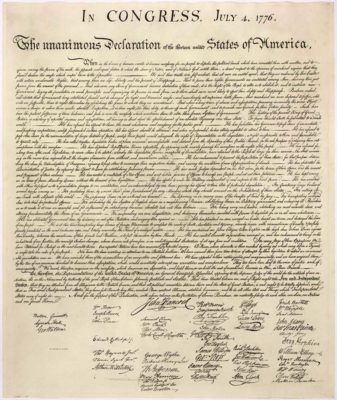
This reminder is presented annually, revised a bit from time to time. Despite dozens of recitations, I can never read the last line of The Declaration out loud because I am overcome with emotion. – DCW
Tomorrow my fellow Patriots and I, however many of us there are, will commemorate and celebrate the 250th anniversary of the most profound statement of human aspiration ever known. We have already endured two violent wars of secession, the first from 1775-1783 and the second from 1861-1865, and I pray that our third one can be avoided by a peaceful segregation of a populace that no longer shares a common vision. Again this year I am especially drawn to the passage “mankind are more disposed to suffer, while evils are sufferable, than to right themselves by abolishing the forms to which they are accustomed.” This sentiment was later expressed by John F. Kennedy, as “When peaceful rebellion is made impossible, violent rebellion becomes inevitable.”
As our nation is seemingly rife with incurious, gullible and servile inhabitants, we would be well-served to reflect seriously on the document encapsulating the mission statement for the greatest nation ever known to man, the only nation ever founded on a creed and geography or lineage. It was and is of course imperfect, no institution created by fallen and sinful men and women can be anything else.
I am an unabashed partisan in the cause of Life, Liberty, and Property (the original draft wording) and find The Declaration of Independence to be the most noble civil document ever created by mankind. I pray you will read and reflect on the ideas expressed by men who pledged their lives, their fortunes, and their sacred honor to pursue the path of liberty. Reading it is much like reading the Minor Prophets of the Old Testament; more up-to-date regarding the human condition than tomorrow’s headlines.
God Bless America, and may righteousness flourish and wickedness be overcome.
========================================================
IN CONGRESS, July 4, 1776.
The unanimous Declaration of the thirteen united States of America,
When in the Course of human events, it becomes necessary for one people to dissolve the political bands which have connected them with another, and to assume among the powers of the earth, the separate and equal station to which the Laws of Nature and of Nature’s God entitle them, a decent respect to the opinions of mankind requires that they should declare the causes which impel them to the separation.
We hold these truths to be self-evident, that all men are created equal, that they are endowed by their Creator with certain unalienable Rights, that among these are Life, Liberty and the pursuit of Happiness.–That to secure these rights, Governments are instituted among Men, deriving their just powers from the consent of the governed, –That whenever any Form of Government becomes destructive of these ends, it is the Right of the People to alter or to abolish it, and to institute new Government, laying its foundation on such principles and organizing its powers in such form, as to them shall seem most likely to effect their Safety and Happiness. Prudence, indeed, will dictate that Governments long established should not be changed for light and transient causes; and accordingly all experience hath shewn, that mankind are more disposed to suffer, while evils are sufferable, than to right themselves by abolishing the forms to which they are accustomed. But when a long train of abuses and usurpations, pursuing invariably the same Object evinces a design to reduce them under absolute Despotism, it is their right, it is their duty, to throw off such Government, and to provide new Guards for their future security.–Such has been the patient sufferance of these Colonies; and such is now the necessity which constrains them to alter their former Systems of Government. The history of the present King of Great Britain is a history of repeated injuries and usurpations, all having in direct object the establishment of an absolute Tyranny over these States. To prove this, let Facts be submitted to a candid world.
He has refused his Assent to Laws, the most wholesome and necessary for the public good.
He has forbidden his Governors to pass Laws of immediate and pressing importance, unless suspended in their operation till his Assent should be obtained; and when so suspended, he has utterly neglected to attend to them.
He has refused to pass other Laws for the accommodation of large districts of people, unless those people would relinquish the right of Representation in the Legislature, a right inestimable to them and formidable to tyrants only.
He has called together legislative bodies at places unusual, uncomfortable, and distant from the depository of their public Records, for the sole purpose of fatiguing them into compliance with his measures.
He has dissolved Representative Houses repeatedly, for opposing with manly firmness his invasions on the rights of the people.
He has refused for a long time, after such dissolutions, to cause others to be elected; whereby the Legislative powers, incapable of Annihilation, have returned to the People at large for their exercise; the State remaining in the mean time exposed to all the dangers of invasion from without, and convulsions within.
He has endeavoured to prevent the population of these States; for that purpose obstructing the Laws for Naturalization of Foreigners; refusing to pass others to encourage their migrations hither, and raising the conditions of new Appropriations of Lands.
He has obstructed the Administration of Justice, by refusing his Assent to Laws for establishing Judiciary powers.
He has made Judges dependent on his Will alone, for the tenure of their offices, and the amount and payment of their salaries.
He has erected a multitude of New Offices, and sent hither swarms of Officers to harrass our people, and eat out their substance.
He has kept among us, in times of peace, Standing Armies without the Consent of our legislatures.
He has affected to render the Military independent of and superior to the Civil power.
He has combined with others to subject us to a jurisdiction foreign to our constitution, and unacknowledged by our laws; giving his Assent to their Acts of pretended Legislation:
For Quartering large bodies of armed troops among us:
For protecting them, by a mock Trial, from punishment for any Murders which they should commit on the Inhabitants of these States:
For cutting off our Trade with all parts of the world:
For imposing Taxes on us without our Consent:
For depriving us in many cases, of the benefits of Trial by Jury:
For transporting us beyond Seas to be tried for pretended offences
For abolishing the free System of English Laws in a neighbouring Province, establishing therein an Arbitrary government, and enlarging its Boundaries so as to render it at once an example and fit instrument for introducing the same absolute rule into these Colonies:
For taking away our Charters, abolishing our most valuable Laws, and altering fundamentally the Forms of our Governments:
For suspending our own Legislatures, and declaring themselves invested with power to legislate for us in all cases whatsoever.
He has abdicated Government here, by declaring us out of his Protection and waging War against us.
He has plundered our seas, ravaged our Coasts, burnt our towns, and destroyed the lives of our people.
He is at this time transporting large Armies of foreign Mercenaries to compleat the works of death, desolation and tyranny, already begun with circumstances of Cruelty & perfidy scarcely paralleled in the most barbarous ages, and totally unworthy the Head of a civilized nation.
He has constrained our fellow Citizens taken Captive on the high Seas to bear Arms against their Country, to become the executioners of their friends and Brethren, or to fall themselves by their Hands.
He has excited domestic insurrections amongst us, and has endeavoured to bring on the inhabitants of our frontiers, the merciless Indian Savages, whose known rule of warfare, is an undistinguished destruction of all ages, sexes and conditions.
In every stage of these Oppressions We have Petitioned for Redress in the most humble terms: Our repeated Petitions have been answered only by repeated injury. A Prince whose character is thus marked by every act which may define a Tyrant, is unfit to be the ruler of a free people.
Nor have We been wanting in attentions to our Brittish brethren. We have warned them from time to time of attempts by their legislature to extend an unwarrantable jurisdiction over us. We have reminded them of the circumstances of our emigration and settlement here. We have appealed to their native justice and magnanimity, and we have conjured them by the ties of our common kindred to disavow these usurpations, which, would inevitably interrupt our connections and correspondence. They too have been deaf to the voice of justice and of consanguinity. We must, therefore, acquiesce in the necessity, which denounces our Separation, and hold them, as we hold the rest of mankind, Enemies in War, in Peace Friends.
We, therefore, the Representatives of the united States of America, in General Congress, Assembled, appealing to the Supreme Judge of the world for the rectitude of our intentions, do, in the Name, and by Authority of the good People of these Colonies, solemnly publish and declare, That these United Colonies are, and of Right ought to be Free and Independent States; that they are Absolved from all Allegiance to the British Crown, and that all political connection between them and the State of Great Britain, is and ought to be totally dissolved; and that as Free and Independent States, they have full Power to levy War, conclude Peace, contract Alliances, establish Commerce, and to do all other Acts and Things which Independent States may of right do. And for the support of this Declaration, with a firm reliance on the protection of divine Providence, we mutually pledge to each other our Lives, our Fortunes and our sacred Honor.
Button Gwinnett
Lyman Hall
George Walton
William Hooper
Joseph Hewes
John Penn
Edward Rutledge
Thomas Heyward, Jr.
Thomas Lynch, Jr.
Arthur Middleton
John Hancock
Samuel Chase
William Paca
Thomas Stone
Charles Carroll of Carrollton
George Wythe
Richard Henry Lee
Thomas Jefferson
Benjamin Harrison
Thomas Nelson, Jr.
Francis Lightfoot Lee
Carter Braxton
Robert Morris
Benjamin Rush
Benjamin Franklin
John Morton
George Clymer
James Smith
George Taylor
James Wilson
George Ross
Caesar Rodney
George Read
Thomas McKean
William Floyd
Philip Livingston
Francis Lewis
Lewis Morris
Richard Stockton
John Witherspoon
Francis Hopkinson
John Hart
Abraham Clark
Josiah Bartlett
William Whipple
Samuel Adams
John Adams
Robert Treat Paine
Elbridge Gerry
Stephen Hopkins
William Ellery
Roger Sherman
Samuel Huntington
William Williams
Oliver Wolcott
Matthew Thornton
The wood monitor
hardware dresser pt XVII.........
 |
| dry fitted |
Feeling a little better today, still sore and painful with movement, but I could manage it. Chopping the pins took me almost an hour. A concession on my part to minimize antagonizing the pain center. It laid flat on the bench with no rocking but the tails and pins weren't fully seated.
 |
| last one |
I didn't forget to do the cutout for the base. Clamped two sides together and drilled a 1" hole.
 |
| one more last thing |
Used rasps to smooth out the undulations for the bandsaw. A few swipes with 100 grit and all four were done.
 |
| happy face on |
A quick check to ensure the dresser fit within the base.
 |
| hmm....... |
Needed some help closing up the tails and pins. It took me almost 2 hours to get to this point. Before surgery I don't think this would have taken me more than 30 minutes. I am getting a wee bit faster but still not anywhere near where I was prior to surgery.
 |
| done |
Evened and smoothed the four sides of the base with the #3. A quick sand with 80 grit finished the base.
 |
| oops |
A mind fart - I made the base on this side out to the outside edge of the molding. It should have been shortened to match the side of the dresser.
 |
| hmm...... |
This cove molding is too tall - The bottom drawer can't open. The bearers are set down 1/8" from the top. If the bottom rails on the dresser had been 3/4" thick the cove molding would have fit but the front and back bottom rails are 1/2" thick.
 |
| problem |
 |
| hmm....... |
I had a smaller molding but I didn't want to use it. If fits and the bottom drawer clears it and opens/closes freely. The moldings will only go on 3 sides. It will butt into the flat stock and be mitered at the front.
 |
| just needs knobs |
 |
| too big |
Ten of these 1 3/6" knobs for $2.52 and it is too big for the smallest drawer. It is barely small enough to fit on the 4 larger drawers. Rethinking whether or not to switch back to the shaker knobs. One option is to use a small shaker knob for the top drawer and the metal ones for the other four?
When I enlisted in the Navy in October of 1974 I was 5' 11" and 221 lbs. On my oncology appointment this week I weighed 251 but I had shrunk to 5' 7 3/8". I don't feel shorter and nurse said around age 25 we all start to shrink. I had noticed this over the years but I thought it was faulty measuring equipment. It ain't so boys and girls.
The pain in my left side is getting better as in less painful. I still have a stubborn bubble of fluid on the center of my chest and lower left rib cage. It hasn't changed in size for several days. My heart rate is normalized somewhat. It is now in the high 60s to middle 70s. Still high for me, I usually have a resting heart beat of 45-50. For several days now it hasn't gone nutso racing up to 120 to 130. I still think the fluid bubble is the cause for my heart rate headaches.
accidental woodworker
Pages
