
Hand Tool Headlines
The Woodworking Blogs Aggregator
“Glory to God in the highest heaven, and on earth peace to those on whom his favor rests.” - Luke 2:14
Norse Woodsmith Blog Feeds
glass door cabinet pt VI.........
 |
| first side panel ass'y |
Initial check of the tenons said that not only did they fit but they were snug and self supporting. In the on deck circle was trimming the tenons and checking the fit of them fully seated.
 |
| first dry fit |
Happy with this. The tenons haven't been sucked down fully but they look ok at all the rail and stile connections. This first dry fit confirms that the tenons are good as is.
 |
| fully seated |
No hiccups when I clamped across the three rails. The rail/stile joints are dead nuts flush and none are off more than a frog hair or two.
 |
| 2nd side panel |
The bottom rail/stile connection (IMO) is unacceptable. It is about a strong 32nd on both faces and the same headache on the opposite end. The difference is too much to sand/plane and feather out. The other four connections are acceptable.
 |
| plywood fits |
I got the panel to slide into the corner without having to beat into place with a mallet. However, I don't like this as I can see a slight misalignment between the rail and stile groove walls. Most likely I sawed the tenons of this one wrong from the other two in this set.
 |
| see it? |
I got the thin and thick walls between the rail and stile as it should be. I don't like not having the groove walls aligned. This little bit may bite me on the arse at glue up if I leave it. The fix is to either remove some wood from one face of the tenon and shim the opposite face or enlarge the mortise and shim the tenons afterward.
 |
| and the winner is.... |
Decided to avoid thinning the tenon and reducing its strength. Instead I am going to enlarge the mortise but only by removing wood from the thick walled side of the groove. A bit tedious removing some wood and then checking the fit repeatedly.
 |
| oak veneer |
When I got close I checked the fit of the tenon and it was decent with this oak veneer. I still had more to go and in the end the oak veneer turned out to be too thin.
 |
| bandsawn veneer |
I only needed two shims, one on each tenon. I sawed these a bit fat so after they were cooked I would have to trim them to fit.
 |
| almost |
Slow going moving the rail flush with the stile. I think at this point I had moved it forward about 3/4 of the way. I was using a chisel and a rasp. One problem I had was I went from a tapered wall (side to side and not up/down) to one with a hump. Removing the hump tried my patience big time.
 |
| done |
There is a huge improvement in rail/stile flush. It is close enough that I can feather it out flush with sanding. It took me over an hour to get this rail flush with the stiles.
 |
| cooking |
Glued on the shims and set them aside to cook for a couple of hours. Killed the lights here because watching glue dries sucks.
 |
| 90 minutes later |
I am liking this LN rabbet plane more and more for trimming tenon cheeks every time I use it. It took almost no time at all to get both cheeks fitting snug and almost flush.
 |
| first one fitted |
Haven't decided yet but I could place this on the inside of the cabinet. That will depend upon how it looks after it is glued and sanded smooth.
 |
| done |
Got the second one fitted quicker than the first one. Both of them came out snug and self supporting.
I only have one 30x30 6mm plywood panel which will only give up two panel inserts and I need 4. I will make a road trip to the Walpole Woodcraft tomorrow. On sunday the traffic will be almost nonexistent. I'll saw up the panels and get the two assemblies glued and cooking. Then its on to the door.
accidental woodworker
Have you missed me? I’m Back!

Due to some technological mishaps my blog has been “incognito” for the last 3-4 weeks! I didn’t realize it until a couple of my followers told me about it. The problem was with my domain registry but happy to say it’s been resolved — I do have a love/hate relationship with technology for sure!
What you may have missed is the latest project which was my Danish inspired love seat, here’s the link for the first blog about it: https://woodworksbyjohn.com/2025/06/07/danish-inspired-loveseat/
….. and here’s the link showing the completed project : https://woodworksbyjohn.com/2025/06/28/danish-loveseat-finished/
Hope these come through for you; if you feel so inclined I would appreciate a quick note to confirm the the technical issues have been resolved, thanks — John
Assembly day.
With all the holes pierced for the pegs, it's finally time for assembly. The rain is holding off, so I'm going to do it outside.

Even with all the pre-fitting, it can still be a struggle to get all the pieces together. The idea is that the offset of the holes will pull all the joints together. I am going to give it a trial squeeze with sash clamps, before I put any pegs in. That way I can see if there needs to be any final adjustment of the shoulders.

All of these parts are from gnarly English oak, and even though they were straight and true when I first planed them, some have moved and twisted. This kind of construction allows for that and as long as you can get the tenons part way into the mortices, once they all tap home, the whole of it miraculously transforms into a straight thing. Sure enough, the shoulders of the top rail/stile joint needed squaring up.
Time to gather the pegs. One final check to makes sure all the holes are in the right place.

And then bang them in. It's a very satisfying process, as the pegs squirm through the offset holes, pulling it all tight.

Then back inside, as the sky is darkening with potential rain.

This chest will be taller than most at 35.5"/900mm, for two reasons. It's going to be a combined tool chest and workbench, with space underneath to slide my other toolbox (which is a WW1 British soldier's kit box, I believe). That height is ideal for me to work at.
Another oddity with this chest, is the brackets; because it's going to be a workbench/toolbox, I've upped the amount of pegs by a factor of 4. Period brackets often had only one peg, these have 4 each. It's going to take a lot of punishment, so I want it to be as strong as possible.

Where the rail carvings run onto the stiles, I have left this unfinished, so I can take those final cuts now the front is joined. I have to trim off those pegs first.
glass door cabinet pt V.........
 |
| out of the clamps |
I was mildly surprised by how the rail/stile joints looked after coming out of the clamps. I didn't see/feel any of misalignment seen/felt on the dry fit up.
 |
| the worse one |
This rail/stile is misaligned about 3 frog hairs. Happy with how it turned out. I think the stiffness of the 6mm plywood had a lot to do with it.
 |
| 6mm fillers |
I got the fillers from ripping off the walls on the off cuts from the rails. They are almost a perfect fit - I'll just have to shave a wee bit to flush them.
 |
| sawing the horns |
I laid out a pencil line a few frog hairs proud. Sawed it off on that and planed the stile ends flush with the bottom of the rails.
 |
| done |
Much easier than I anticipated. In the back of the brain bucket I envisioned a lot of scenarios where I butchered this saw cut. Out of square in a bazillion directions were the headliners.
 |
| last one to smooth, flush, and square |
I'll have to repeat this dance steps when I do the sides. I think I'll approach them with a lot less apprehension.
 |
| 6mm fillers |
I didn't leave the stub when I sawed the tenons to width. Once the cabinet is together the empty hole will never be seen. Filled it in mostly to give me a warm and fuzzy about keeping the bottom from twisting.
 |
| side project |
Both of these are covers for my cell phone. If I put the cell phone in my pocket, as I walk it will intermittently shut off, lower the volume, or load a new you tube. Putting this on top of the phone between the screen and my pocket shut down 99.9% of this nonsense. I listen to podcasts on You Tube on my post lunch strolling - the cell phone blue tooth goes right to my blue tooth hearing aids.
 |
| chopping side mortises |
I got two stiles done before lunch time rolled around.
 |
| 3 coats |
I'm going with 6-7 coats on these. I sweat a lot on my strolling and shellac doesn't like moisture. Hoping the multiple coats will help.
 |
| sigh |
I screwed it up again. I want to scream and I did along with a barrage of expletives not to be heard in mixed company. The quirk making all the problems - the 6mm groove isn't centered. When I made the test groove a couple of days ago I didn't center it before plowing the grooves in the rails and stiles. I just ensured that I marked an X on the reference face for the fence.
That hiccup made for a lost interchangeability, that I had to check to make sure as I laid out the mortises. Here the grooves - the wide and skinny walls aligned but I laid out the mortises opposite. I put the top at the bottom on one and the opposite on the other. Result is the groove walls don't align with the mortises. I had to make a new stile.
 |
| FYI |
One thing I've learned over the years is to leave the tools set and don't change them. If I need a different groove set up I will set and use another plow plane - I have five of them. I will not break down or stow a tool until the project is complete, finished, over with, a check mark in the done column. And it seems I lost my ability to count again because I have 3 extra stiles so I guess that is serendipitous.
 |
| double, triple checking it |
There isn't a huge difference in the groove walls but it is enough to throw off sliding the panels in place. I stopped and walked away 4 times before I said it was aligned and it was ok to lay out the mortise locations.
 |
| side rails |
Before I started the tenons I checked that all of these aligned. I used the X reference face to ensure they matched.
 |
| snug fit |
Cut the tenons on the tablesaw and got a good fit and it is also self supporting.
 |
| sawing the cheek waste |
 |
| old habit |
I will save the off cut waste for just in case. I checked two more tenons for fit and I was happy with them. Probably won't need them and the pack rat in more says to save them for .......
 |
| chopping mortises again |
Here you can see the two outside walls are just a wee bit fatter then the two inside ones. A subtle difference that will bite you on the arse and draw blood.
 |
| sigh or oops |
These two rail tenons are too thin. They are a strong 32nd or more too loose in the mortise. The thickness of these two rails is about a strong 32nd more than the 3rd rail in this series. Hence the loose fitting tenons. Rather glue veneers on the cheeks I opted to make two new rails that are the same thickness as the 3rd rail (the bottom one).
 |
| extra rail stock |
These are unused due to the change in the layout for the panels. I can get both the middle and top rails from these two.
 |
| done |
Replacement rails done and test fitted. Snug and self supporting. All is well in Disneyland again.
 |
| 6mm filler |
The replacement rails came from stock that was grooved on both edges. The top edge of this one (which will be the top rail) I will fill in the groove. It will never be seen once the cabinet is finished. Filling it in will allow me to nail, screw, or glue along this edge as needed.
Looking ahead to tomorrow to finish chopping the mortises and get the side assemblies glued, clamped, and cooking. Then I can start on the door and how to make the divided lite glazing bars.
accidental woodworker
Razor Sharp in under 30 sec.
The title is not click bait, it’s real. I stumbled on it last night. It’s a total game changer for me and anyone else who wants to give it a go. I am talking about A2 steel razor sharp as if it has come off the strop in under 30 seconds flat. Watch the video to see how.
glass door cabinet pt IV.........
It was hot, humid, and sticky today. The post lunch stroll was a PITA. I did a 3 Stooges routine trying to peel my sweat soaked T shirt off when I got back to the barn. That tired me out more than the stroll did. In spite of that adventure I made good progress on the cabinet. There is still a long ways to go but every journey starts with the first step.
 |
| hmm...... |
Put the opposite stile on to see how it fit. Two of the tenons fit and two didn't. Part of the fun with mortise and tenon joinery for me it the fitting.
 |
| 30 minutes later |
Dry fitted and clamped. Happy with the rail to stile connections. All of them look good but a couple of them aren't flush. Some of the rails were slightly cupped - enough to cause a misalignment with the stiles. I didn't plane it because I didn't want to thin the rails at all. I'll deal with the alignment issues with planes, sanding, and wood putty because after all it is getting painted.
 |
| width first |
Used two sticks to measure the width of the panels. The width of all three were the same.
 |
| setting the tablesaw |
These sticks are for the height of the panels.
 |
| 3 sets |
I used leftover banding moldings for my measuring sticks.
 |
| 3 panels |
I don't have enough 6mm plywood for the cabinet. I figured this out before I brain farted and cut one wrong too. Another road trip to the Walpole Woodcraft is in the near future. I'll bring calipers so I can measure the thickness of the plywood.
 |
| oops |
I made the bottom panel too wide or too tall. Depends upon whether you are a 1/2 full or 1/2 empty type personality. Spoiler alert - me-steak upcoming.
 |
| too small |
I should have, would have, could have, but didn't eyeball the panel before running it through the saw. I didn't check to ensure that I had the orientation correct before trimming it to size.
 |
| not again |
This is what I missed when trimming the original panel. Oh well I can use the screwed up panel to make boxes.
 |
| dry fit |
I did an asymmetrical layout on the panels. The top and bottom panels are the same size with the middle panel being 1 1/2 inches taller.
 |
| hmm..... |
Both of these squares are the only ones that I have that don't have shoulders. They lay flat in the panel and say all three are square. The wooden squares when checked with Mr Starrett are a paper width off square at the far end from the 90. Both say the panels are square and the diagonals are dead on too. I was having a deja vu sensation but the light bulb never came on. How can the say it is square when they are a frog hair off? Does that make a difference when used wood on wood this way? I'll look around for a small framing square or something similar.
 |
| side rails |
Before gluing up the back I plowed the grooves in the six rails for the sides. Decided to go with two plywood panels in each side. I did that because the width of the plywood panel will be about 9 inches. The height around 22 inches.
 |
| going well |
No hiccups or urges to find my 3lb sledge hammer. The first part of the glue up went off without a hitch and zero stress. Glued on the last stile, clamped it, and set it aside to cook. Hoping that the sides glue up as easy as this one.
 |
| paper thick gap |
When I sighted down the stiles they looked pretty good to the eye. Not dead nuts perfectly straight but good enough maybe. I just have the two ends clamped and there is a varying gap everywhere in between the clamped ends. Just to be safe I did the stiles for the sides the same way I did the back stiles.
 |
| done |
It took me about 30 minutes to plow all the grooves in the rails and stiles.
 |
| mortise layout |
This story stick is a mess with a few incorrectly marked mortises. It was a bit confusing but I slowed down, took my time and got everything transferred correctly. Here I did the top, bottom, and the middle rail mortises.
 |
| got lucky |
I grabbed the correct bottle for me. I got this being reversible from watching Rosa String Works you tube vids. It isn't as quick and easy as hide glue, but it is doable.
accidental woodworker
Do you have one of these in your shop?
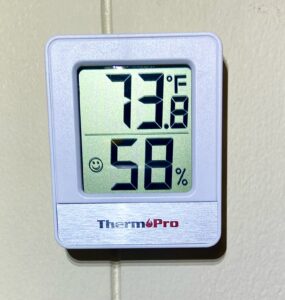
glass door cabinet pt III.........
 |
| what a clown show |
I laid out the two stiles, one at a time. Then I laid the two against each other and they didn't agree. I have absolutely no idea how I screwed it up and gave up trying to figure it out. Instead I clamped the stiles together and planed as much of the layout lines off as I could. And I started over again
 |
| switched lanes |
I didn't erase as much of the layout as I thought. What was left was confusing me and it took me a while checking the existing lines against what the layout stick had before moving forward for the 2nd time.
 |
| two times was the charm |
This finally worked and everything clicked into place. I clamped the layout stick and the two stiles together before I transferred mortise locations. The first time I tried this I couldn't get top or the bottom mortises to line up. Got it on the 2nd try.
 |
| not much |
I double, triple checked the two stiles against each other a bazillion times. I even went topside, got a coffee came back and checked it one more time. Once I was satisfied that the plow plane had bottomed out it was on to chopping the mortises.
 |
| my first set of chisels |
I got this set in the late 1970's or very early 1980's and for over 20 years I never knew that it was metric. Duh.
 |
| 6mm chisel |
I measured it with my calipers and it said it was 5.94mm. The chisel fit in the groove with a few frog hairs of wiggle room. It took me a few chops to get used to it. The flat on the top of the blade was a bit difficult to zoom in on to keep square in the groove.
 |
| about 3/8" at the widest |
Both of the stiles are bowed - here I have them as they will be R and L.
 |
| gone |
It takes almost zero pressure to flatten out the bow. I don't think the plywood will have any hiccups keeping the stiles straight. This is the back and I'll be able to flush the outside edges of the back stiles against the back edge of the sides.
 |
| first four chopped |
This went surprising quick. It took me a little more than 30 minutes to whack them all out.
 |
| 2nd set done |
I left a lot of extra at the top and bottom of the stiles. A wee bit more than needed but then again I didn't get any blowouts on any of the top/bottom mortises I chopped.
 |
| test tenon |
I increased the bottom rail from 3 to 3 1/2 wide to strengthen the back against twisting. Doing a test tenon to check the water first. It has been a while since I have done one. The plan was to do the cheeks to width on the tablesaw and hand saw the cheek waste off.
 |
| self supporting |
It took some fiddling but the width of the tenon was good. I had to pare the walls of the mortise before I got the test tenon seated. Not happy with the rail not being quite flush with the stile - on either side.
 |
| last one |
I thought I had made the tenons too thin (visually based look) but I hadn't. These are 6mm and not 1/4".
 |
| all self supporting |
I decided to go with a ladder style back for strength and stiffness. Still debating whether to use this for the sides too are just one rail in the middle. Chopping the extra mortises didn't cause any hardship. I'll have to see how many panels I can get out of the 30x30 panels. I've got a sinking feeling that I might be disappointed.
The tablesaw is working fine with the new V belt I installed. No hesitation, no slipping, and no bogging down in the cut. It spins up to speed instantly and it doesn't falter when wood is fed into the saw blade. It slowed a wee bit when sawing the tenons in the jig but that is normal. I didn't feel or see any difference doing the tenons with this belt than I did with the original one. All is well in Disneyland again.
accidental woodworker
Cracked Pot
On Using The Gramercy Tools Treadle Lathe
We are about to start offering pre-sale opportunities for the Gramercy Tools Treadle Lathe. It has been a three year long haul, but we are finally ready. Our shop is manufacturing parts and our aluminum fabricator is getting ready to make the frames.
This means we will be formally establishing the process for taking $500 refundable deposits to reserve a lathe at a pre-sale price. The pre-sale purchase price will be $3,400. We expect to be able to deliver the lathes by the end of the year. The $3,400 is a little below the retail list price, which will go to $3,600 when the lathe is in production. What the deposit does it get you in the queue. When we are ready to ship the lathe, we will contact you for the balance. If at that time you decide to delay or not proceed with your purchase, we will refund your $500. If we dont deliver the lathe by the end of 2025, you are welcome to cancel your pre-order and get a refund.
In the next few days we will be updating the website with more information and details on the pre-sale please see the website. This is a complicated machine and as is standard for big machines, shipping will be extra.
The real point of this blog post is to share this video of Alan Dorsey using the lathe. Alan, a professional turner and wood turning teacher whom many of you met at Hand Works in Amana, has extensive experience with our lathe prototypes. Here is also has interesting insights on the difference between power and treadle turning. Both good, but different.
In other news:
After 38 years together, my friends Ken and Mike of the company Jorgensen Carr, cabinet makers extraordinaire, are retiring and closing up shop. First of all a hearty congratulations to them because 38 years in a small business, especially a woodworking business, is quite an achievement. The fact that they are still talking to each other is amazing.
I've known Ken since he was the teaching assistant when I studied woodworking with Maurice Fraser back in the 80s. When I first needed shop space for my own woodworking, the fledgling Jorgensen Carr company rented me some bench space. One of the big lessons I learned from them was that you should be able to trust your equipment. So when you set a miter fence to 45 and made a cut it was 45. When you set your table saw to 2-3/8, it was 2-3/8. Ken also impressed upon me the need to make sure your equipment is maintained so you're not fighting your environment.
Typically when a big shop closes, you hire an auctioneer to sell off the stuff - machines big and small. Hand tools of all types. Wood. It's always a little sad when a great shop closes, but auctions are the way the next generation gets started. Jorgensen Carr is no different. Their auction is in a week or so and you can see the details here. Auctions can be a great way to get big equipment and/or round out equipment needs. You may note that the Festool tools include some items that are now discontinued, like the CT 22 vacuum, but we still sell bags for this vac because there are plenty of them still doing their jobs in shops across the country, even though they haven't been offered by Festool for many years. A shout-out to our customer Austin who is always looking for a chance to buy an ETSEC sander used, but "no one ever sells an ETSEC, even when shops close," because no one likes to part with this tool.
glass door cabinet pt II.........
 |
| layout |
I am starting with the back first. I am also making R/L sides a copy of it. Used the story stick to layout the mortise locations along with the OAL (over all length).
 |
| not enough |
Got most of the stock sized to rough dimensions but I forgot a couple of pieces. Didn't realize it here though. Plowing the 6mm grooves was in the batters circle.
 |
| grooves plowed in the rails |
 |
| had a bow |
Both stiles had (still do) a healthy bow in them. Clamped them in the vise this way to flatten it so I could plow a true and straight groove.
 |
| 2nd stile |
Both of the stiles had about the same amount of bow. Clamping them in the vise this way straightened them out. Fingers crossed that the 6mm plywood in the grooves will keep the stiles flat.
 |
| gap killers |
In the area of the vise there weren't any gaps. I had to add a few clamps to remove slight gaps on either side of the vise.
 |
| transfer time |
A story pole makes sense (to me) to transfer the needed info on each stile. Thinking ahead, I don't think I'll need a story pole for the rails.
 |
| hmm...... |
This is a wee bit tight. I thought that 6mm was a few frogs wider than a 1/4". I had planned to use the chisel to chop the mortises. I just remembered that I have a 6mm chisel - the very first 6 piece chisel set I bought over 40 years ago. I'll check that chisel out in the AM.
 |
| the forgotten pieces |
Missed prepping the center stile which is two pieces. It is two piece because the plywood is only 30 inches and the inside of the back is around 48 inches.
 |
| two more forgotten pieces |
These are the cross rails for the center stile. I might be able to get the two out of one board but just in case.
 |
| hmm..... |
Eyeballing what I have here to see if I brain farted on any other required pieces. Turns out I have one extra cross rail. I can use that for one of the sides.
 |
| nope |
I am not liking this at all. But because of the length of the plywood I can't make the center stile taller. I want the cross rail to be close to the top - I was thinking 1/3 of the length from the top to the bottom rail. I could split it in half - the plywood is long enough to accommodate that.
 |
| thinking out loud |
If I use three cross rails between the top/bottom ones it would look better than the center rail layout above. This set up will add 4 additional mortises and tenons to fit. Having the one rail centered is looking like a better look/solution. I could then glue and secure a center shelf to it which would help with rigidity of the cabinet.
 |
| been a while |
Another option for the mortising to come. The 6mm bit fits the groove with zero wiggle room. Drill out most of the waste and clean it up with chisels. I shopped for a 6mm straight bit with an imperial shank but nada. The mortise I intend is roughly 1 3/8" deep and I couldn't find a 6mm straight bit longer than 1".
I stopped here because I had to think about this before I did any drilling/chisel work. I still haven't settled on the width of the cabinet and that led to me questioning the width of the sides? The back width is driven by the size of the glass door. I won't want it being too wide - I'm thinking 20" wide tops.
accidental woodworker
Why We Don’t

Sawing to the line
I made a quick video on sawing to the line without the need of having a knife wall. If your sawing abilities are right up there, then making a knife wall is just a waste of time.
the smallest state.....
I was wondering why today as I was strolling why so many places were closed. Then it dawned on me, today is VJ day or as it is officially know, Victory day celebrating the end of WWII with Japan's surrender. The littlest state in the union is the only one that observes it as a state holiday. However, when I worked at the VA they didn't recognize it because it isn't a federal holiday. And federal trumps state. After 80 years maybe it is time to join the other 49 states.
 |
| Woodcraft haul |
I got back to the barn around 1115 with these three 30x30 6mm birch plywood panels. Along with a quart of Titebond glue that I didn't check to see if it was the original formula. That one you can reverse the glue bond like hide glue. I got zero time in the shop for the AM session.
I think I only need one full panel and a partial piece from a 2nd one for the cabinet. I bought a 3rd one for just in case. A 30x30 panel cost $22 and a 48x48 panel was $69. I was going to buy one but not for that price. It was cheaper for me to drive to the store and buy it over ordering it via the internet.
 |
| lots of variation |
I could see a thickness variation in the three panels I got. This was the thinnest one, the baby panel.
 |
| mama bear panel |
 |
| papa bear panel |
There was no mistaking that this was the thickest one. I would rather deal with an oversized panel than one that is too thin.
 |
| mama bear panel |
I made a 6mm test groove. It fits on the mama bear panel with out having to beat it on. Not overly snug and not loose neither. Didn't check if it was self supporting.
 |
| the baby bear panel |
The test groove easily slips onto the panel. Not fall down and out loose but just a hint of being a wee bit sloppy. I plan on gluing the panels in the groove so this will work.
 |
| papa bear panel |
It will fit if forced but that is something I don't want to do. I want a easy fitting panel that doesn't require any persuasion at all.
 |
| back panel stock |
I have the side panels (R/L) settled but the back I'm still not sure of. Initially I thought of making the sides and back panels all the same but I'm not 100% sold on that. Thinking of a solid wood back instead of stiles/rails and panels. Plenty of time to decide on that.
 |
| side panel stock |
All the stile and rails are 3" wide. Going with that width for rigidity and strength. The stiles and rails on the cabinet I saw at my niece's house were 2" wide and they looked thin to my eye.
 |
| stickered |
Nothing moved, cupped, or bowed when I ripped out the stock. Fingers crossed that none of it does any stupid wood tricks overnight.
 |
| potential door stock |
All of these are flat sawn but all of them are clear. No knots and all the boards are flat and straight. The outside edges are close to rift sawn so they would be best for the stiles and rails. This is going to be painted so I don't have to agonize over grain/color matching.
 |
| two more |
The right board has one knot but I can get the long stiles out of it. Both outside edges of these two are rift sawn too. I have three more boards but they have knots in them and I can't get any required long lengths out of them. It sucks that they have the best rift sawn possibilities. Sigh.
It made it up to 99F - 37C today and it isn't going to cool off much for a couple of weeks. The shop temp is hovering around 77F - 25C which is comfortable once I start working. Before I know it I'll be pissing and moaning about it being cold.
accidental woodworker
Shootingboard Build Tips Part 1
If you haven’t seen the first part of this build yet, watch it here:
https://www.youtube.com/watch?v=bKP-WY1Aoy8 That’s where I cover the basics and show the setup — this video is all about the important tips and things to watch out for so your shooting board works perfectly from the start.
pic frame finale.....
 |
| future picture gallery |
I have 3 blank walls in the back hallway for my Stanley Tool pics. It is also the only blank walls left in the house. There is zero wall space in the shop so this will have to do. It is going to be a bit tricky hanging the pics in here - there are steps in the way of setting up a ladder.
 |
| why not |
I waxed the newest pic frame with the LAP wax. I liked the shine of the shellac but I also liked the wax finish afterward. The frame didn't look as harsh in reflected light.
 |
| one more round of touch up |
After I ran the gray pad around the frame a few more white specs popped out. Had to touch them up one more time before I could shellac them.
 |
| one coat of shellac |
The three frames looked good after one coat but it was still wet too. I couldn't see any evidence of the spots I had touched up. Fingers crossed that won't change as the shellac dries.
 |
| two coats |
I could see a couple of spots that I had touched up after the first coat had dried. With the second coat of shellac I couldn't see them anymore. Either way it doesn't matter because I'm stopping here at two coats. Where these will hang I won't be able to get close enough to see the touched up spots.
 |
| ready for tuesday |
Brought the new frame upstairs to await its journey to the Frame It shop. I am going to give a mini japanese toolbox to Maria when I bring the frame. I meant to give it to her when I picked up the previous 7 frames but I had forgot to bring it.
Made my mind up on the frames for the glass door cabinet. I initially I had been hell bent on using dowels but realized the futility of that. I am going to use mortise and tenon joinery. I couldn't think of any other way to plow grooves in the stiles/rails and attach them with dowels.
With mortise and tenon joinery I can plow straight through the rails and stiles and not run into any hiccups. I will have to get some 6mm plywood for the panels though. I will try the closest Woodcraft to me first and see what they have in stock.
accidental woodworker
Pages
